Wilsonville, OR · Garage Door Service
When a Wilsonville Garage Door Needs Replacing, Not Just Fixing
A look at when a Wilsonville garage door needs replacing instead of repair, based on the area's 1960s-90s housing stock and wet winter climate.
- Repairs & new doors
- Springs & openers
- Serving 4 nearby communities
When It Stops Being a DIY Job
A lot of homeowners start with a YouTube video and a trip to the hardware store, and for a loose hinge or a sticky roller that's fine. It stops being a weekend project the moment you're dealing with a torsion spring under tension, a bent track that's pulling away from the jamb, or a panel that's rusted through at the bottom where it sits closest to the slab. Houses in this area went up mostly between 1964 and 1997, with the median landing around 1978, so a good share of the doors we get called out to are original or close to it - single-layer steel on side-mounted torsion hardware that nobody stocks parts for anymore. At that point you're not fixing a door, you're trying to keep a 1970s system alive with parts built for something newer. We'll tell you straight when a repair isn't worth it: if the track is from that era and the opener has already been swapped once, sinking money into the old door usually costs more over two years than replacing it does up front. One honest limit here - if you want an exact match to an original panel profile from that period, sourcing it can take weeks, and sometimes it isn't made anymore at all.
The Situation
Across the 28 named areas we cover - Sherwood five miles out, Canby another five, Aurora six, Stafford seven, Bull Mountain eight - the bulk of the housing is still 1960s and '70s construction, with newer infill mixed in through the 90s. That matters for door buying because older garages were framed to standard sizes of their decade, and a lot of replacement doors sold today are cut for slightly different rough openings. The median household income across this service area runs $101,462, and with 92,298 households total and 47,540 of them owner-occupied houses, we see a consistent pattern: people replacing a door outright rather than patching it twice, especially once they've already paid for one repair call that didn't hold. That's a reasonable way to think about it. A door that's failed once on original hardware is telling you something about the rest of the system, not just the one part that broke.
What Most People Get Wrong
The biggest mistake is assuming the new door just needs to fit the opening. On a house from the 1960s-70s stock that makes up most of this area, the opening might be standard, but the track clearance, headroom, and backroom space were often built around a lighter, thinner door than what's sold today. Insulated doors are heavier and need the right spring count to lift them without strangling the opener. The second mistake is buying on looks alone - a lot of these homes have shallow garages, and a door with the wrong panel profile can bind on the header. The third is skipping the opener conversation entirely. An opener that was fine lifting a 1970s hollow-panel door can struggle with a heavier insulated replacement, and we won't sell you a door without checking that the opener on the wall can actually handle it. Buying a replacement door here means matching the door to the garage it's going into, not just the garage door opening it was measured for.
What the Weather Here Does to It
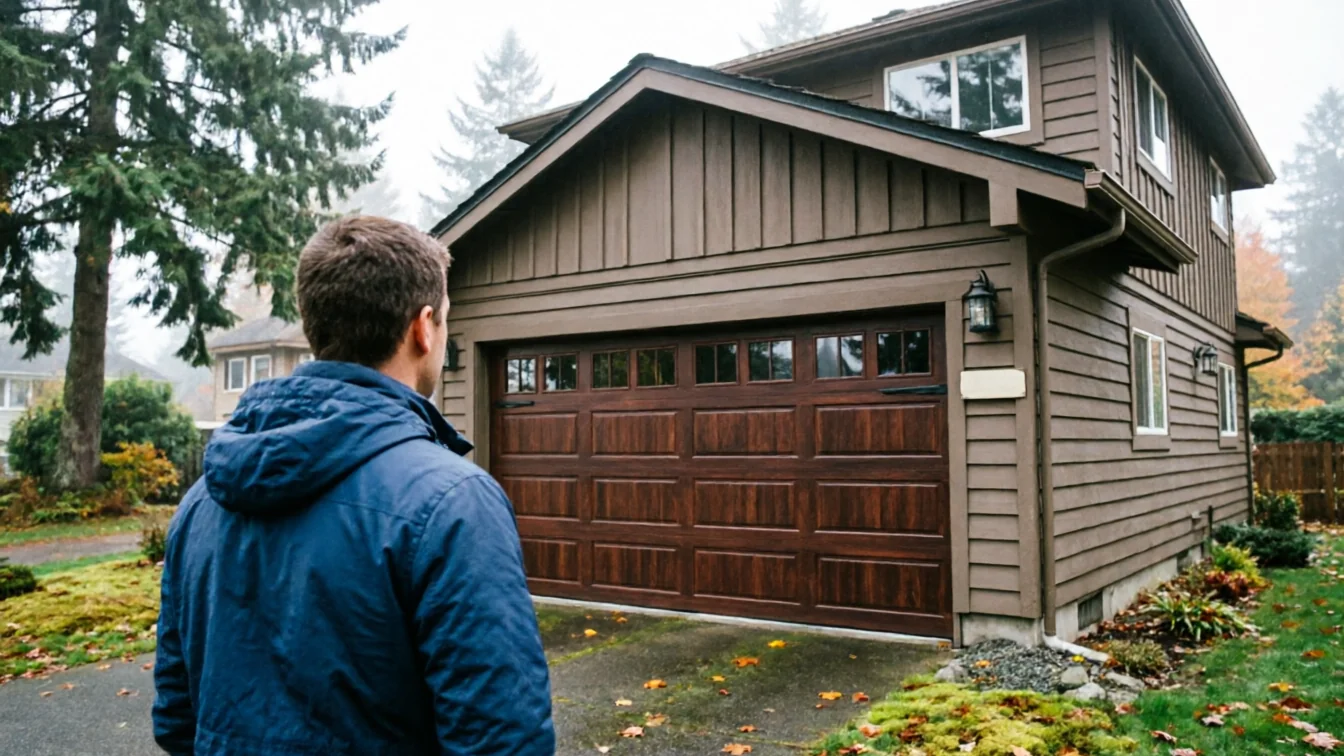
This area sits in a cold-moderate climate band, which in practice means wet winters more than deep freezes. That moisture is hard on anything original from the 1960s-70s era - wood trim around the opening swells and shrinks with the season, and steel panels with worn-out weatherseal start rusting from the bottom edge up, especially on doors that face away from the sun most of the day. We see it most on the older stock scattered through places like Oak Grove, Gladstone, and Jennings Lodge, where a lot of garages still have their original jamb and threshold setup. It's not dramatic weather, no hail damage or wind-torn panels - it's slow, steady dampness doing its work over decades. That's actually a point in favor of replacement over endless patching once a door gets past a certain age: a new door with a proper seal and galvanized steel handles that damp cycle a lot better than a 50-year-old panel ever will.
Frequently asked questions
How do I know if my garage door needs replacing instead of repair?
If the door is original to a house built before the 1980s and you've already had one repair call, replacement usually makes more sense than another patch. Rust at the bottom panel, a track pulling away from the frame, or an opener struggling to lift the door are all signs the whole system is aging out together.
Will a new insulated door fit my older garage opening?
Usually the opening itself is fine, but headroom, backroom, and spring sizing on older garages were often built for lighter, thinner doors. We check clearance and opener capacity before recommending a specific door so it doesn't bind or overload the lift motor.
Does the wet weather here really affect garage doors that much?
It's less about one bad storm and more about steady dampness over years. Original steel panels and wood trim from the 1960s-70s stock in this area tend to rust and swell slowly at the bottom edge, which is one reason older doors fail gradually rather than all at once.
Related garage door services in Wilsonville
More garage door guides
Book garage door service in Wilsonville
Call now or request a quote - tell us what the door is doing and where you are.