
Wilsonville, OR · Garage Door Service
When Your Wilsonville Garage Door Is Older Than You Think
Most Wilsonville homes were built between 1964 and 1997, before today's insulation codes - here's what that older stock means for your garage door and spring.
- Repairs & new doors
- Springs & openers
- Serving 4 nearby communities
When It Stops Being a DIY Job
If your garage door is original to the house, there's a good chance it dates from the long stretch of construction between 1964 and 1997 that makes up most of the homes around Wilsonville. A homeowner can handle a stuck photo-eye sensor or a frayed weatherstrip, but a torsion spring on a door from that era is a different matter: the springs holding up a double door carry real tension, and a cable snapping under load can do damage fast.
If your door is original to a house built in the 1960s or 70s, the hardware might be past the point where parts are still made, and that's not a weekend job with a socket wrench. We don't stock parts for every track system from that period - some of the oldest one-piece doors need a full replacement rather than a repair, and we'll say so instead of forcing a fix that won't hold. Knowing the difference between a part we can source and one we can't is most of the job before any tools come out.
The Situation
Wilsonville sits inside a part of the metro area where most homes went up between 1964 and 1997, with the median landing around 1978. That holds true across the 28 named communities nearby, from Sherwood five miles out to Woodburn and St. Paul twelve miles south. A door built to the standards of that Carter-era housing boom doesn't match what goes in today.
Across the wider service area there are roughly 92,298 households and 47,540 owner-occupied houses, which means a lot of that same cohort of door - plain steel panel, no foam core, original torsion hardware - is still doing its job decades past when it was built to last. Median household income in the area runs about $101,462, which means plenty of owners can afford a proper insulated replacement instead of patching an old door every couple of years; the math tends to work out better over time than another round of repairs on a door that was never insulated to begin with.
What Most People Get Wrong
The biggest mistake we see on houses from that 1964-1997 wave is treating a drafty, sagging door as a weatherstrip problem when the real issue is the door itself. These are doors on houses built before insulation rules existed, meaning a single layer of steel with no foam core at all - there was no code requiring one at the time. New weatherstripping around the edges helps a little, but it doesn't change the fact that the panel has zero R-value.
People also assume replacing it means losing the look of the house, but current doors come in styles that match the 1960s-70s stock common across this stretch of the metro without carrying the thermal problems of the original steel. We won't push a full replacement on a door that's working fine just because it's old - if the panels are sound and the hardware is tight, a spring swap or a new opener is usually the better call than tearing it out.
What the Weather Here Does to It
This area sits in a cold-moderate climate band, which means winter mornings bring enough chill that steel contracts, grease stiffens, and a door that rolled fine in August starts binding by January. On an original door from the 1960s-70s stock common here, that contraction matters more because the track alignment and roller tolerances were never set up with any thermal break in mind.
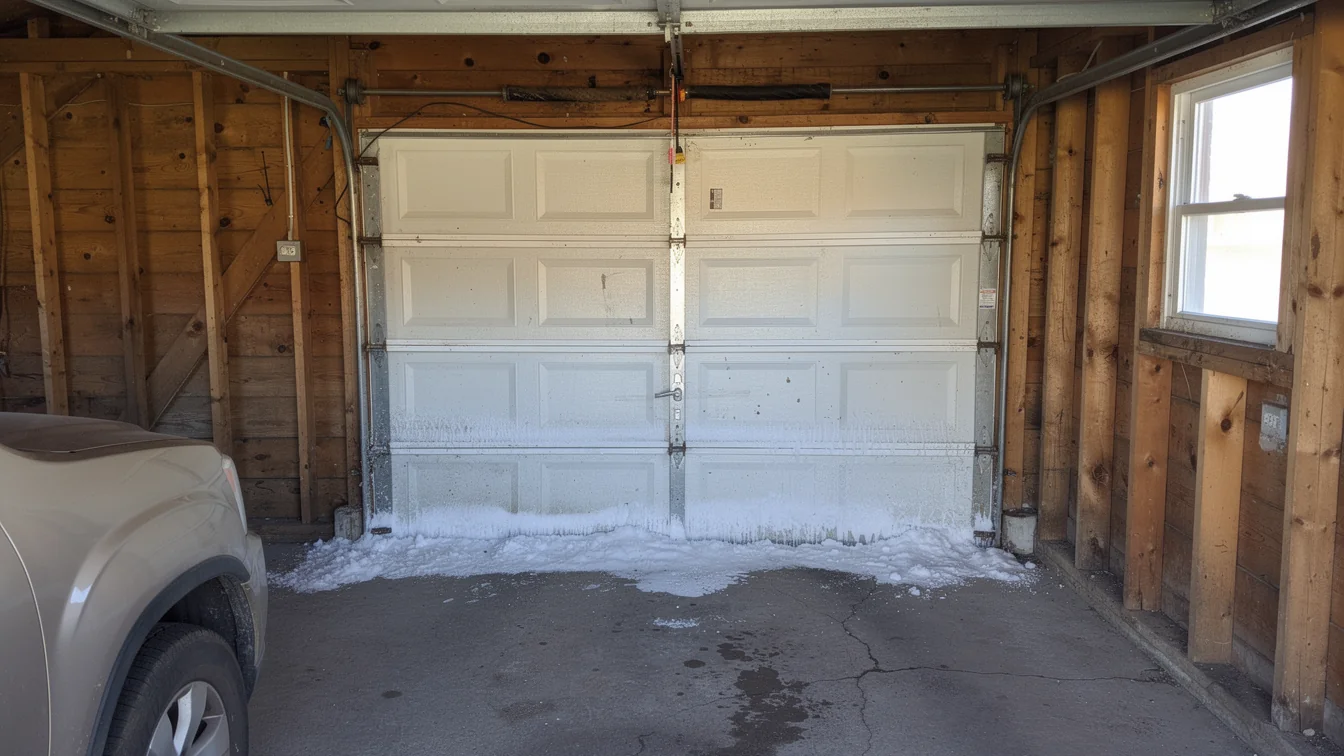
Condensation is the other issue: a cold, uninsulated steel panel next to warmer garage air sweats, and over enough winters that moisture works into the seams and hardware mounts. None of this is dramatic in a single season, but it adds up faster on a door that's already 30 to 50 years into its working life. If your opener has started straining on cold mornings or the door drags on the track, that's often the cold doing what it does to steel that was never built with today's insulation standards in mind.
Frequently asked questions
My garage door is from the 1970s - should I repair or replace it?
If the panels are solid and the hardware is sound, a spring swap or new opener is often enough. Doors from that era, common across the 1964-1997 housing wave here, usually have no foam core, so if yours is also drafty and sagging, replacement with an insulated door is usually the better long-term fix than another repair.
Why does my garage door stick in cold weather?
This area sits in a cold-moderate climate band, so steel contracts and grease stiffens on cold mornings. On older doors without thermal breaks, that shows up as binding on the track or an opener straining to lift. It's rarely one big failure - it's the cold working on hardware that was never built with insulation in mind.
Do you carry parts for older garage doors?
Not always. Some of the oldest one-piece track systems from the 1960s and 70s use hardware nobody manufactures anymore. When that's the case, we'll tell you replacement makes more sense than hunting for a part that may not exist, rather than stringing out a repair that won't hold.
Related garage door services in Wilsonville
More garage door guides
Book garage door service in Wilsonville
Call now or request a quote - tell us what the door is doing and where you are.