
Wilsonville, OR · Garage Door Service
When the Power Goes Out, Your Opener Doesn't Just Pause
Wilsonville homes built 1964-1997 often run openers wired straight into house power. Here's when a power outage means a real problem, not just an inconvenience.
- Repairs & new doors
- Springs & openers
- Serving 4 nearby communities
When It Stops Being a DIY Job
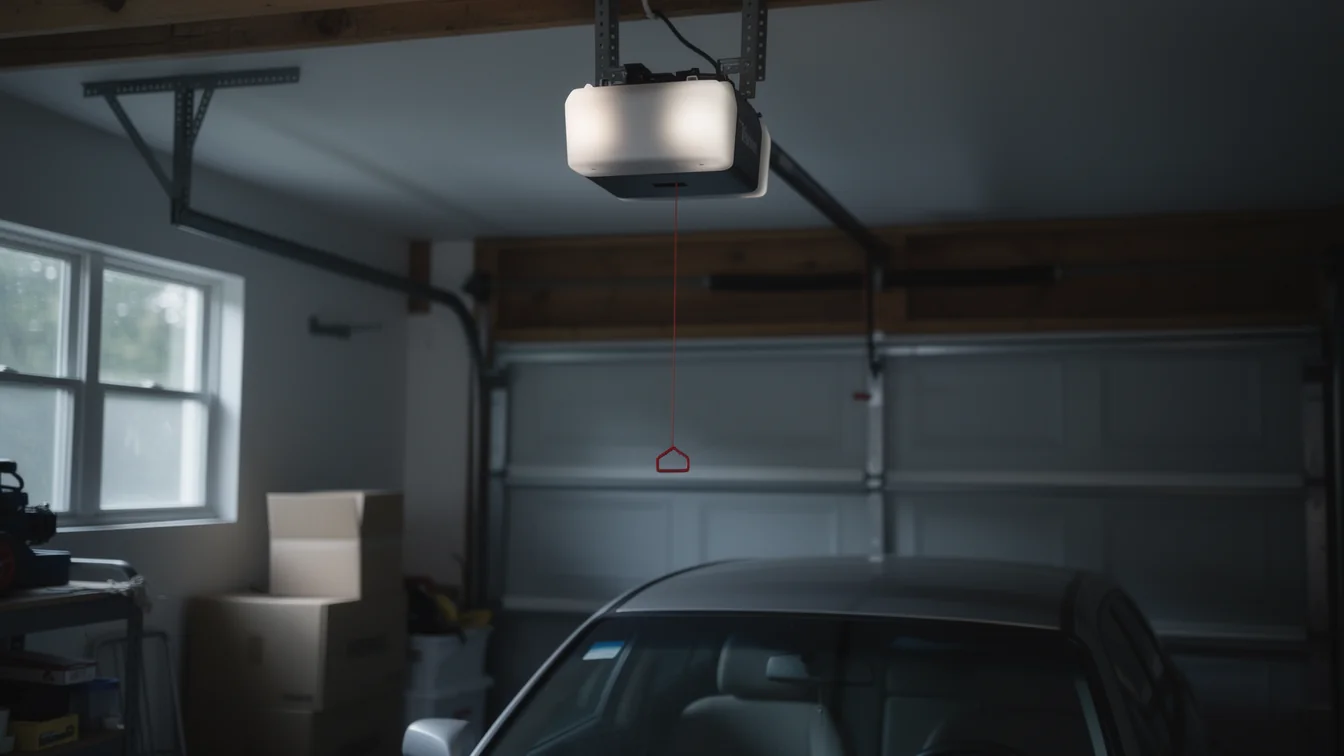
A lot of Wilsonville houses were built between 1964 and 1997, with most of that stock going up in the 60s and 70s across the 28 named areas around here. That generation of garage came with an opener bolted to the ceiling and wired hard into the house circuit, no battery backup, no plug-and-play swap. When the power drops, that opener doesn't sleep and wake up fine - it loses its logic board memory, sometimes its limit settings, and the chain or belt stays wherever it stopped. If you're pulling the emergency release cord yourself to get the car out, that's fine, that's what it's for. Where it stops being a DIY job is when the power comes back and the opener won't re-learn its travel limits, or the motor hums but the door doesn't move. At that point you're not resetting a clock radio, you're diagnosing a control board on a unit that might be older than the house's last roof. Pulling the release cord is safe. Poking at the logic board with the cover off while the unit is still live is not, and that's where people get hurt or fry a board that was otherwise fine.
The Situation
Across the Wilsonville service area there are roughly 92,298 households and about 47,540 owner-occupied houses, and the age of that housing matters here more than almost anything else. Openers installed when a 1970s build was new have had one, maybe two, replacement cycles by now, and the wiring runs to code that predates GFCI requirements in a lot of garages. A power outage on a newer home is a non-event - the opener reboots, the Wi-Fi module reconnects, done. A power outage on an opener original to a 1978-median-era house, or even its first replacement from the 90s, can mean a dead capacitor finally gives out the moment the circuit re-energizes. We see this pattern often enough in homes from that build window that it's worth checking your opener's age against your house's, not just assuming it survived the outage unscathed.
What Most People Get Wrong
The common mistake is assuming the opener is broken because it won't respond right after power returns, when really it just needs its travel limits re-learned - a five-minute fix on most units, not a replacement. The opposite mistake is just as common: assuming a dead opener after a cut is nothing and letting it sit, when a surge during restoration actually did take out the board, and now the door is being forced open and closed by hand on springs it was never meant to handle without assist. Given the housing stock here, we'd rather tell you straight: if your opener is original to a 1960s-70s build, a hard power outage is a reasonable moment to ask whether you're repairing a unit near the end of its service life or buying time on something that'll fail again at the next outage. We won't tell you to replace a working opener just because it's old - that's money in your pocket we don't need. But we also won't pretend every reset is free.
What the Weather Here Does to It
Wilsonville sits in a cold-moderate climate band, which means the power outages that matter aren't summer brownouts, they're the cold-weather outages - ice or wind events that knock out a circuit for hours at a time. Cold makes grease in an older opener's gear housing stiffen up, so the motor draws harder right at the moment the board is also recovering from a dirty power restoration. That's a bad combination for a unit already pushing 20-plus years. It's also why we don't recommend running the door on manual override for more than a day or two in winter - the springs on an older door are doing more of the lifting than they were designed for once the opener's assist is out of the picture, and cold tightens tolerances on tracks and rollers too.
Frequently asked questions
My opener's lights blink but the door won't move after a power outage - what's wrong?
That's usually the travel limits getting lost during the outage, not a broken motor. Most openers need to be re-taught where open and closed are. If the motor hums but nothing moves, or you hear a click with no motor sound at all, that's more likely a board or capacitor issue, especially on an opener from the 1960s-70s building era common in this area.
Should I replace my opener just because the power went out?
No. A power outage alone doesn't damage most openers. Replace it if it won't re-learn its limits, if the board was already flaky before the outage, or if it's original to an older Wilsonville build and this is the second or third outage-related call. One clean outage with a quick reset isn't a reason to spend money.
Is it safe to leave the door on manual override until I can get it fixed?
For a day or two, yes. Longer than that in cold weather, no - the springs are carrying the door's full weight without the opener's assist, and on an older torsion setup that's more strain than the hardware was sized for long-term. Get it looked at rather than leaving it on manual through a cold stretch.
Related garage door services in Wilsonville
More garage door guides
Book garage door service in Wilsonville
Call now or request a quote - tell us what the door is doing and where you are.