
Wilsonville, OR · Garage Door Service
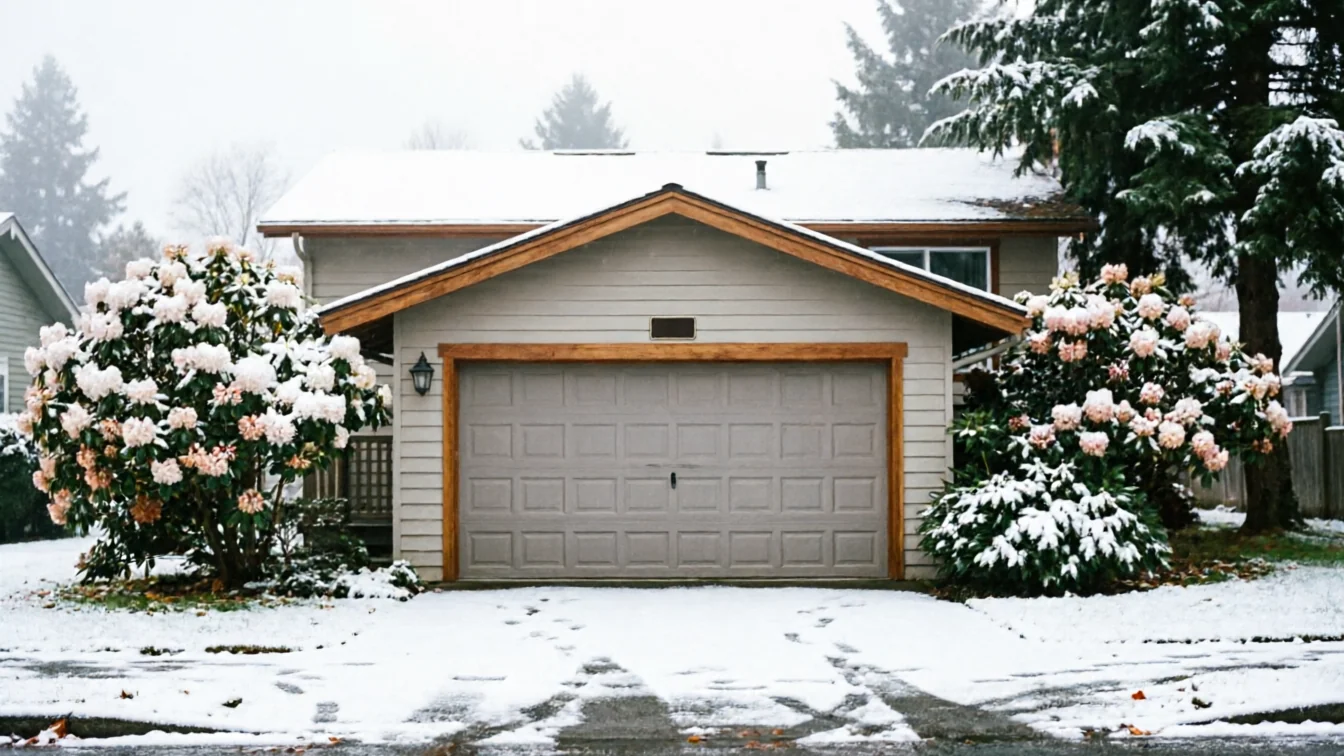
When a Garage Door Spring Breaks in a Wilsonville Winter
Wilsonville, OR homes from 1964 to 1997 often have original torsion springs that snap in cold weather. Here's when a DIY spring swap becomes a bigger job.
- Repairs & new doors
- Springs & openers
- Serving 4 nearby communities
When It Stops Being a DIY Job
A torsion spring looks simple: one bar, two cones, a winding bar if you've got the nerve. On a door built in the last ten years, with a modern spring rated for the wire gauge stamped on the sticker, a careful homeowner can sometimes manage it. That's not most of what we see in Wilsonville. Houses here were built mostly between 1964 and 1997, median right around 1978, and a lot of those garages are still running the spring that came with the house or a replacement nobody matched correctly. On a door that old, the cones corrode, the center bracket isn't lined up the way the manual assumes, and the spring itself has already gone through decades of winding cycles in cold weather. That's where a DIY job stops being a weekend project and starts being a trip to urgent care. We'll say it plainly: if the door is original to a house from that era and the spring breaks in winter, that's a call-a-pro job, not a wrench-and-video job. One limitation worth naming - we don't stock every spring size on the truck, so if your door uses an odd length or wire gauge from that build era, the first visit may be diagnosis and ordering, not a same-day fix.
The Situation
Wilsonville sits inside a stretch of the metro where the housing stock skews older than people assume - built mostly in the 1960s and 70s across all 28 named areas nearby, from Sherwood five miles out to Cornelius twenty miles the other direction. Canby and Aurora sit five and six miles off, Stafford's at seven, Bull Mountain at eight - all of it built in roughly the same window, 1964 to 1997, median around 1978. That matters for garage doors because the hardware ages with the house. Across the service area there are 92,298 households and 47,540 owner-occupied houses, and median household income runs $101,462 - high enough that most people here replace a door or opener when it's worth it, rather than patch it forever. But a lot of these houses never had the door touched since it went in. The spring, the cable, the rollers - original, or close to it. When a service call comes in from Jennings Lodge or Oatfield or anywhere in that ring of towns, odds are good the door predates the current owner. That's the backdrop for every spring call we take out here: it's not usually a new door failing, it's an old one finally giving out.
What Most People Get Wrong
The most common mistake is buying a 'universal' torsion spring online and assuming it'll match what's on the door. Doors from the 1964-1997 era in this area used wire gauges and wind counts that don't always match what's sold as standard today - the drum size, the shaft diameter, even the cone style can be off by enough to matter. Put the wrong spring on and the door either won't hit full travel or it over-tensions and snaps early, sometimes within a season. The second mistake is skipping the inspection of everything around the spring - the end bearing plates, the center bracket, the cable drums - because on a door that old, those parts have usually worn down right alongside the spring. Replacing the spring alone on a 40- or 50-year-old door and leaving a pitted bearing plate in place just means another call in a year. We won't pretend every repair needs a full hardware replacement - sometimes the spring really is the only failure - but on houses from this build era, checking the rest of the system before closing up the job is the difference between a repair that holds and one that doesn't.
What the Weather Here Does to It
Wilsonville's climate band is cold-moderate, which doesn't sound dramatic until you think about what it does to a torsion spring over time. Steel contracts in the cold, and a spring that's already fatigued from decades of winding cycles has less give left when the temperature drops overnight. That's why the spring that's been limping along all fall usually lets go on the first genuinely cold morning, not during a mild stretch. Lubricant that's gone thick or dried out entirely adds friction right when the metal is least flexible. On older doors from the 1964-1997 stock common here, we see the same pattern every year: the door opened fine the night before, and in the morning the spring's in two pieces on the garage floor. It isn't bad luck - it's cold steel finishing off a spring that was already near the end of its cycle count. We can't stop a spring from reaching the end of its life, and we won't tell you a tune-up makes a 45-year-old spring last forever. What we can do is catch the warning signs - frayed cable, a gap in the coil, a door that's gotten noticeably heavier to lift by hand - before the morning it actually breaks.
Frequently asked questions
Why did my spring break on such a cold morning?
Cold steel has less flex than warm steel, and a spring that's been winding and unwinding for decades is already fatigued. Wilsonville sits in a cold-moderate climate band, so that last bit of flex usually disappears on the first hard-cold morning of the season, which is why breaks cluster then rather than during mild stretches.
Is my spring an odd size because my house is older?
Possibly. Most houses in this area went up between 1964 and 1997, and doors from that window often used wire gauges and wind counts that don't match what's sold as a generic replacement today. That's part of why we check the actual spring before quoting a swap instead of guessing from the door's age alone.
Do you work outside Wilsonville itself?
We cover the surrounding area, including towns like Sherwood and Canby about five miles out, Aurora at six, and Stafford at seven - most of it built in the same 1964-1997 window as Wilsonville, with the same kind of aging garage door hardware.
Related garage door services in Wilsonville
More garage door guides
Book garage door service in Wilsonville
Call now or request a quote - tell us what the door is doing and where you are.