
Wilsonville, OR · Garage Door Service
What an Older Garage Door Is Actually Worth Fixing
Wilsonville homes mostly date 1964-1997. We break down when a torsion spring or track repair makes sense on that era of door, and when it doesn't.
- Repairs & new doors
- Springs & openers
- Serving 4 nearby communities
When It Stops Being a DIY Job
If the door won't move and you can see a gap in the torsion spring above the opening, stop. That's a wound spring under real tension, and on a door from the 1964-1997 building wave that's common across this area, those springs are often original or a prior owner's cheap swap - sized for a lighter door than what's hanging now. A snapped cable, a bent track, or a panel that's pulled away from its roller bracket is also past the point of a YouTube fix. We don't do remote phone diagnosis for spring jobs; a torsion system needs eyes and a winding bar in person, not a guess over the phone. If the opener motor hums but the door doesn't lift, that's usually the spring, not the opener - people replace the wrong part more often than you'd think.
What you can safely check yourself: the photo-eye sensors near the floor track, whether the track is visibly bent, and whether the door balances when disconnected from the opener and lifted by hand halfway. If it won't hold at the halfway point on its own, the spring is under- or over-tensioned and that's not a tightening job - it's a parts job.
The Situation
Across the Wilsonville service area, housing mostly dates from 1964 to 1997, with a median build year around 1978, and that pattern holds through most of the 28 named areas nearby - Sherwood, Canby, Stafford, Bull Mountain, and the rest. A door installed with the house in the late 1970s is now pushing fifty years old, and most garage doors, hardware included, aren't built to last that long without at least one spring or cable replacement along the way. Median household income in the area runs around $101,462, and with roughly 47,540 owner-occupied houses in the broader service area, a lot of these households are sitting on original or near-original hardware they've never had reason to think about.
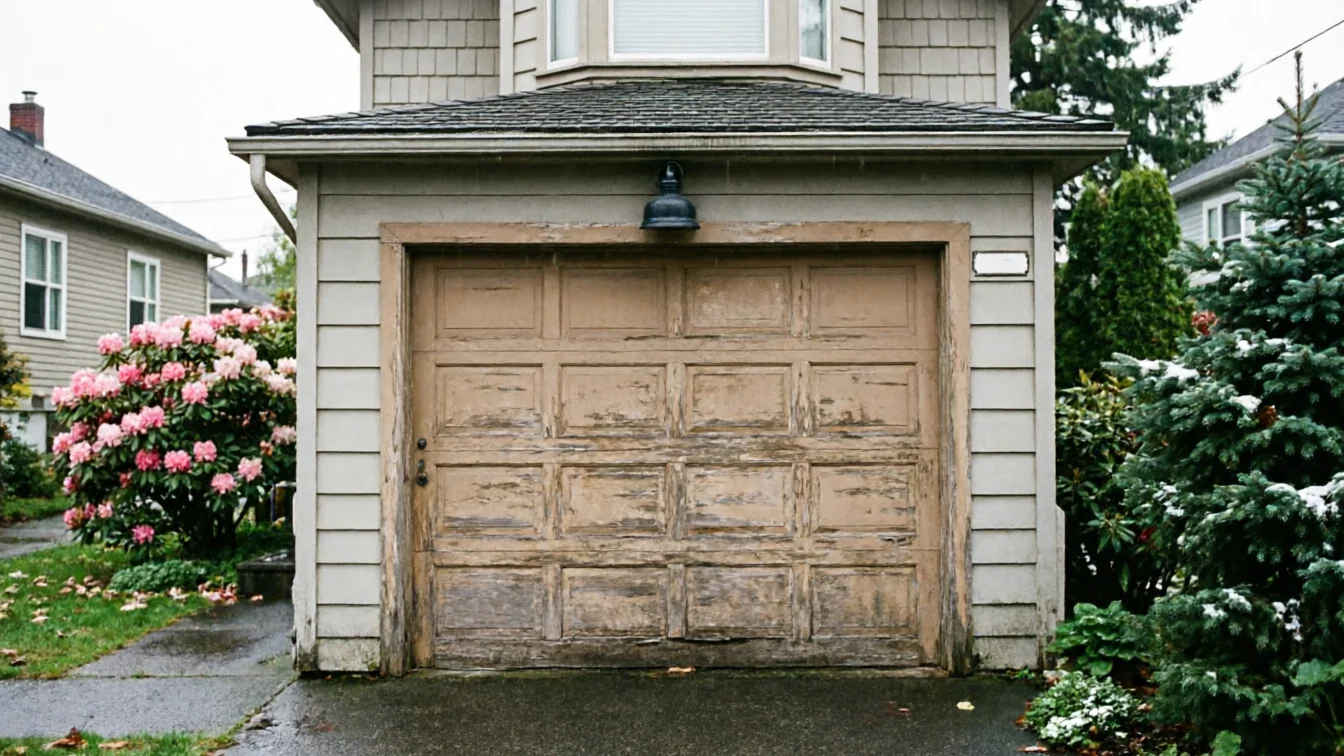
The practical question isn't age alone - it's what's failed. A steel door from that era with surface rust but a sound panel and working track is usually worth fixing: springs, rollers, and cables are standard parts. A door with rotted wood panels, warped sections, or a track that's been reworked more than once is a different conversation, and we'll tell you that straight rather than keep billing small repairs on it.
What Most People Get Wrong
The biggest mistake is assuming a noisy door needs a new opener. Most of the noise on a house built in that 1964-1997 window comes from dry, worn rollers or a track that's lost its alignment over decades of settling, not the opener motor itself. Replacing rollers and re-squaring the track costs a fraction of a new opener and usually solves it.
The second mistake is ignoring a slow spring failure. Springs don't usually snap without warning - they lose tension gradually, and the opener starts straining to lift a door it used to handle easily. People let that go for months because the door still technically works, and then the motor gear strips or the spring finally lets go under load, sometimes while someone's standing under it. On houses from this build era, a spring that's never been replaced is overdue, not just old.
Third: people with a door from the 1970s or 80s assume replacement is automatic once something breaks. It isn't. If the frame and panels are sound, a spring and roller job runs far less than a full replacement, and there's no reason to junk a door that's structurally fine.
What the Weather Here Does to It
This area sits in a cold-moderate climate band, which means garage door hardware deals with damp cold more than extreme heat - steady moisture and temperature swings through the winter months, not sudden heat-cracking like a drier climate would cause. That matters for steel doors from the 1964-1997 building stock: surface rust on hinges, roller shafts, and the bottom panel seal is the most common failure we see, not warping from sun exposure. Lubrication intervals matter more here than in a dry climate - a track and roller set that would go two years without attention in a drier region needs more frequent care here to avoid seizing up.
We can't tell you a repair will outlast a specific number of winters - that depends on how the door's been maintained, not just its age. What we can say is that a door with surface corrosion but an intact frame is almost always a repair, not a replacement, in this climate. Galvanized or coated hardware holds up noticeably better here than bare steel, and if you're replacing parts anyway, it's worth asking for the coated version.
Frequently asked questions
My garage door is from the 1970s - should I just replace it?
Not necessarily. If the panels aren't rotted or warped and the track is straight, a spring and roller job usually solves the problem for a lot less than full replacement. Age alone isn't the deciding factor - condition is. We'll tell you honestly if a repair isn't worth it on your specific door.
Why does my door get noisy every winter?
In this climate band, cold and damp cause surface rust on rollers, hinges, and shaft bearings faster than heat would. That rust is what causes the grinding or squealing, not usually the opener motor. Regular lubrication through the colder months cuts down on it significantly.
Can I replace a torsion spring myself?
We don't recommend it. A wound torsion spring holds serious tension, and winding or unwinding one without the right bars and experience has hurt people. It's one of the few repairs on a garage door where doing it yourself is a genuine safety risk, not just a time trade-off.
Related garage door services in Wilsonville
More garage door guides
Book garage door service in Wilsonville
Call now or request a quote - tell us what the door is doing and where you are.